Best sellers
Sample data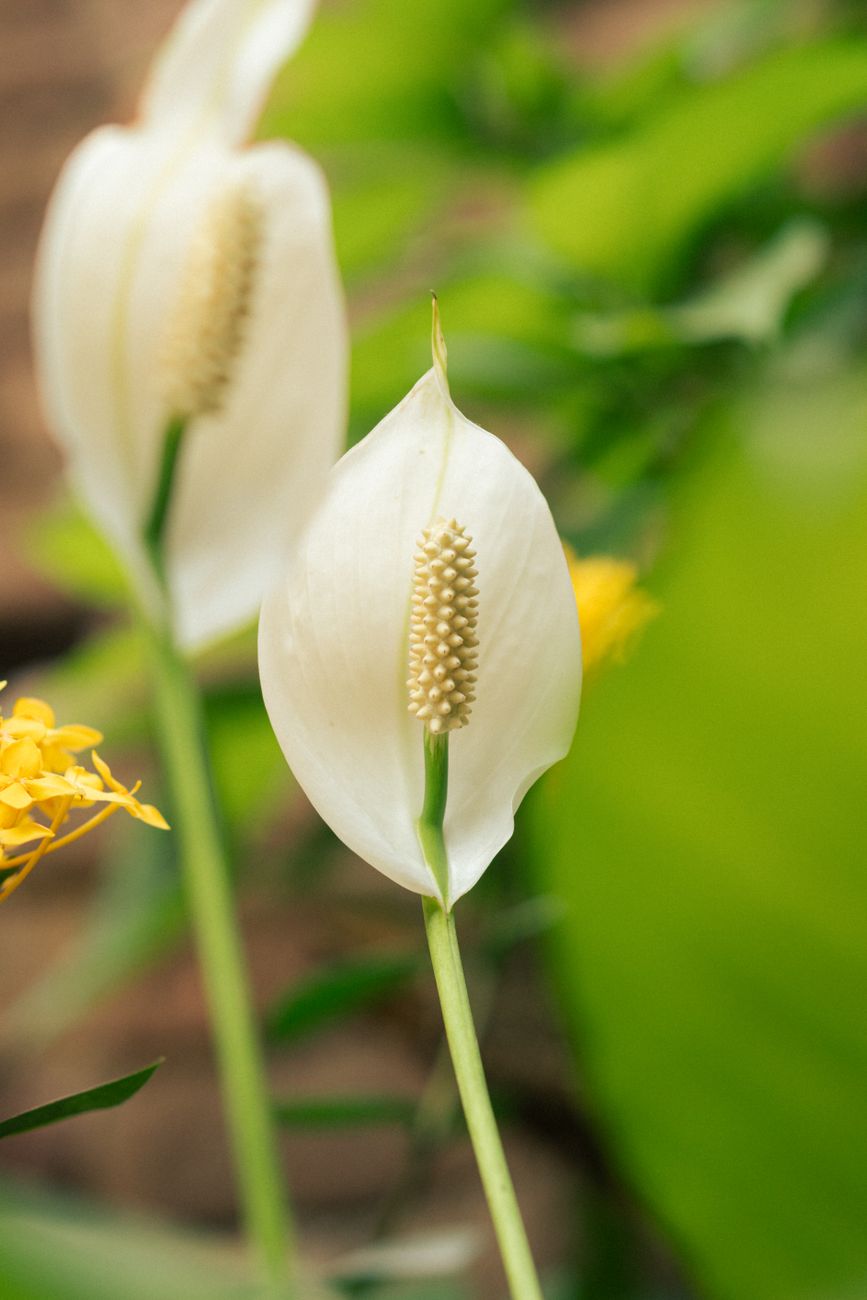
of 1 / 2
Sample data
Spathiphyllum wallisii
Flowers in shade, and wilts theatrically to tell you it is thirsty.
JD 22.00
Out of stock
Peace Lily
JD 22.00
One of very few plants that will genuinely flower in a low-light room. The white spathe is not a petal but a modified leaf, and it lasts for weeks. Between flushes it is a perfectly good foliage plant with glossy dark leaves.
It is also the most expressive plant we sell — it wilts dramatically and completely when dry, then recovers within a couple of hours of watering. Alarming the first time, then simply informative. It appreciates humidity, which makes it one of the few things that does better in a bathroom than a living room.
Low to medium indirect light; direct sun scorches the leaves. Keep the substrate lightly moist but never waterlogged. Brown leaf tips usually mean dry air rather than a watering problem — group it with other plants or stand it on a pebble tray. Remove spent flowers at the base.
Our plants are grown on and acclimatised locally before they are sold, which is the step that prevents the leaf drop people often see after buying a plant that has just been shipped. Where a specimen was originally sourced from abroad we will tell you if you ask.
The same mix for every plant we pot: coco peat for moisture retention, perlite and volcanic rock for air pockets and drainage, and composted bark for structure. The success of a plant starts from the correct substrate — it is the most common reason indoor plants fail. We sell the same mix if you want to repot yourself.
Kentia palm, Calathea orbifolia, Echeveria and Boston fern are not known to be toxic. Monstera, pothos, philodendron, ZZ plant, snake plant, peace lily, and the ficus species are toxic if chewed. Every product page states this explicitly, and where the evidence is genuinely unclear we mark it as unconfirmed rather than guessing.