Best sellers
Sample data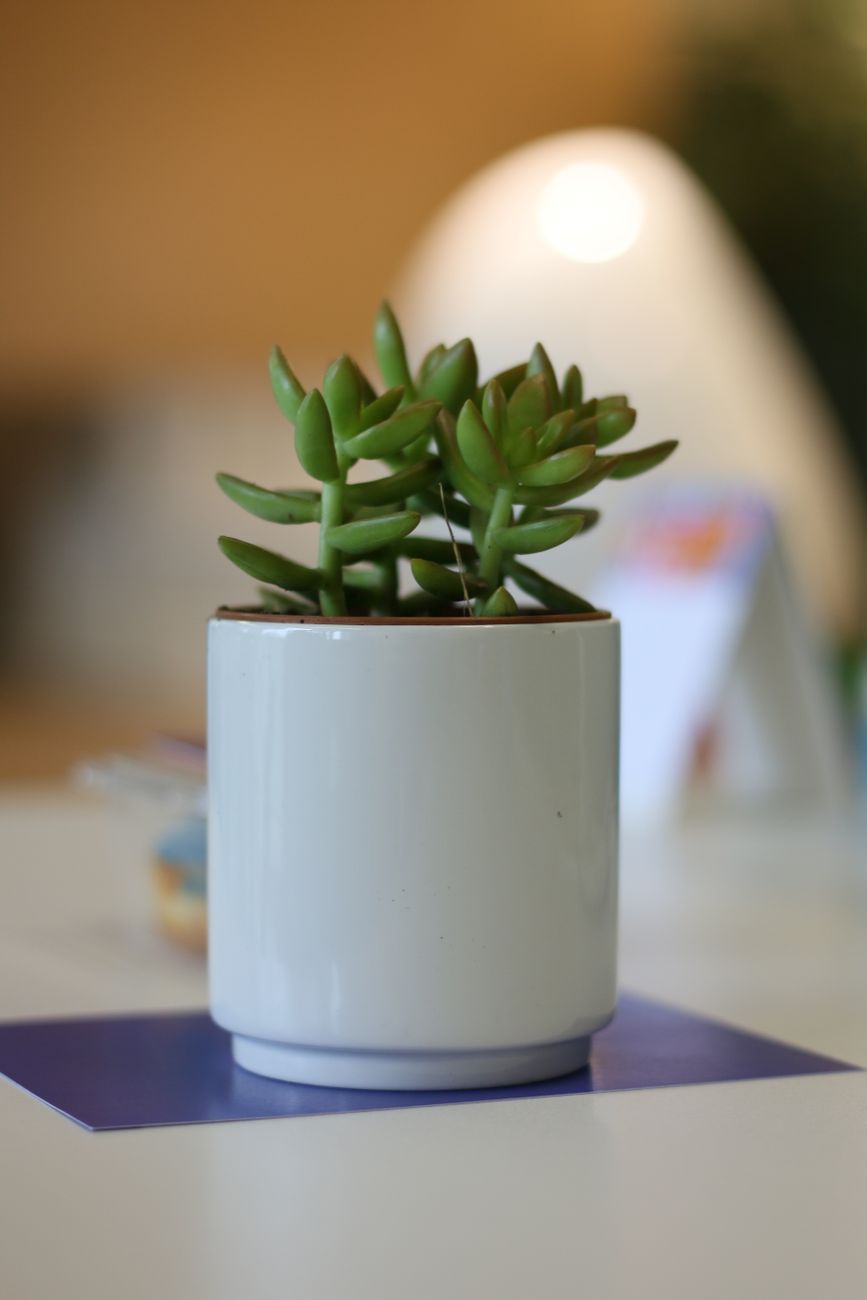
of 1 / 2
Sample data
Echeveria elegans
A rosette succulent for a bright sill. Pet-safe and almost impossible to underwater.
JD 8.50
In stock
Echeveria in Ceramic
JD 8.50
Echeveria forms a tight geometric rosette with a pale, powdery bloom on the leaves — that coating is a natural sunscreen, which is why you should avoid touching or misting them.
This is a plant for the brightest spot you have. In too little light the rosette stretches and loses its shape, which is not reversible; the plant is telling you it needs more sun. Potted in a fast-draining gritty mix in a glazed ceramic pot.
As much direct light as you can give it — a south or west windowsill. Water thoroughly but rarely: every 2–3 weeks in summer, monthly or less in winter, and always let it dry out completely first. Water at the base, not over the rosette, where trapped water causes rot. Do not mist.
Our plants are grown on and acclimatised locally before they are sold, which is the step that prevents the leaf drop people often see after buying a plant that has just been shipped. Where a specimen was originally sourced from abroad we will tell you if you ask.
The same mix for every plant we pot: coco peat for moisture retention, perlite and volcanic rock for air pockets and drainage, and composted bark for structure. The success of a plant starts from the correct substrate — it is the most common reason indoor plants fail. We sell the same mix if you want to repot yourself.
Kentia palm, Calathea orbifolia, Echeveria and Boston fern are not known to be toxic. Monstera, pothos, philodendron, ZZ plant, snake plant, peace lily, and the ficus species are toxic if chewed. Every product page states this explicitly, and where the evidence is genuinely unclear we mark it as unconfirmed rather than guessing.